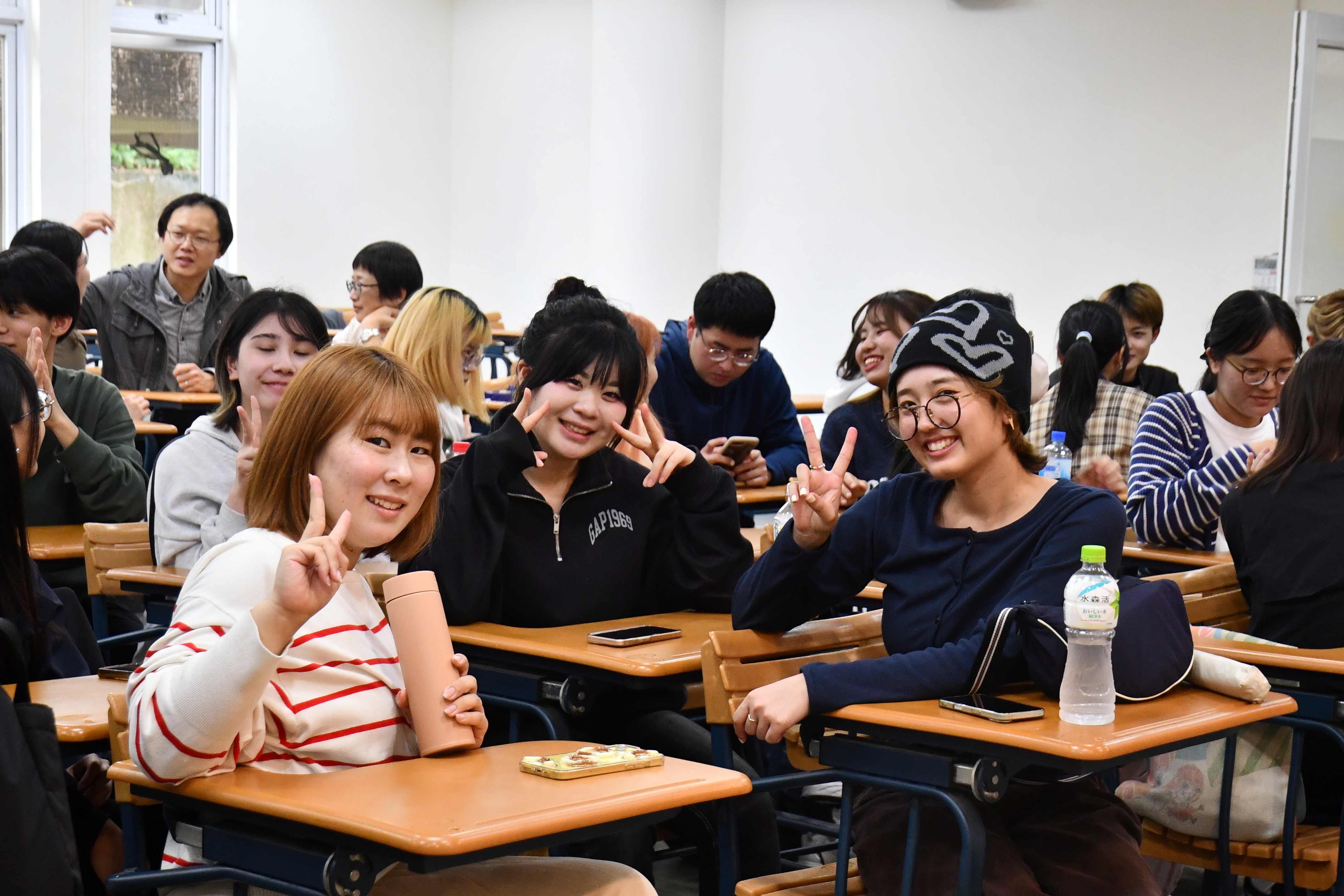
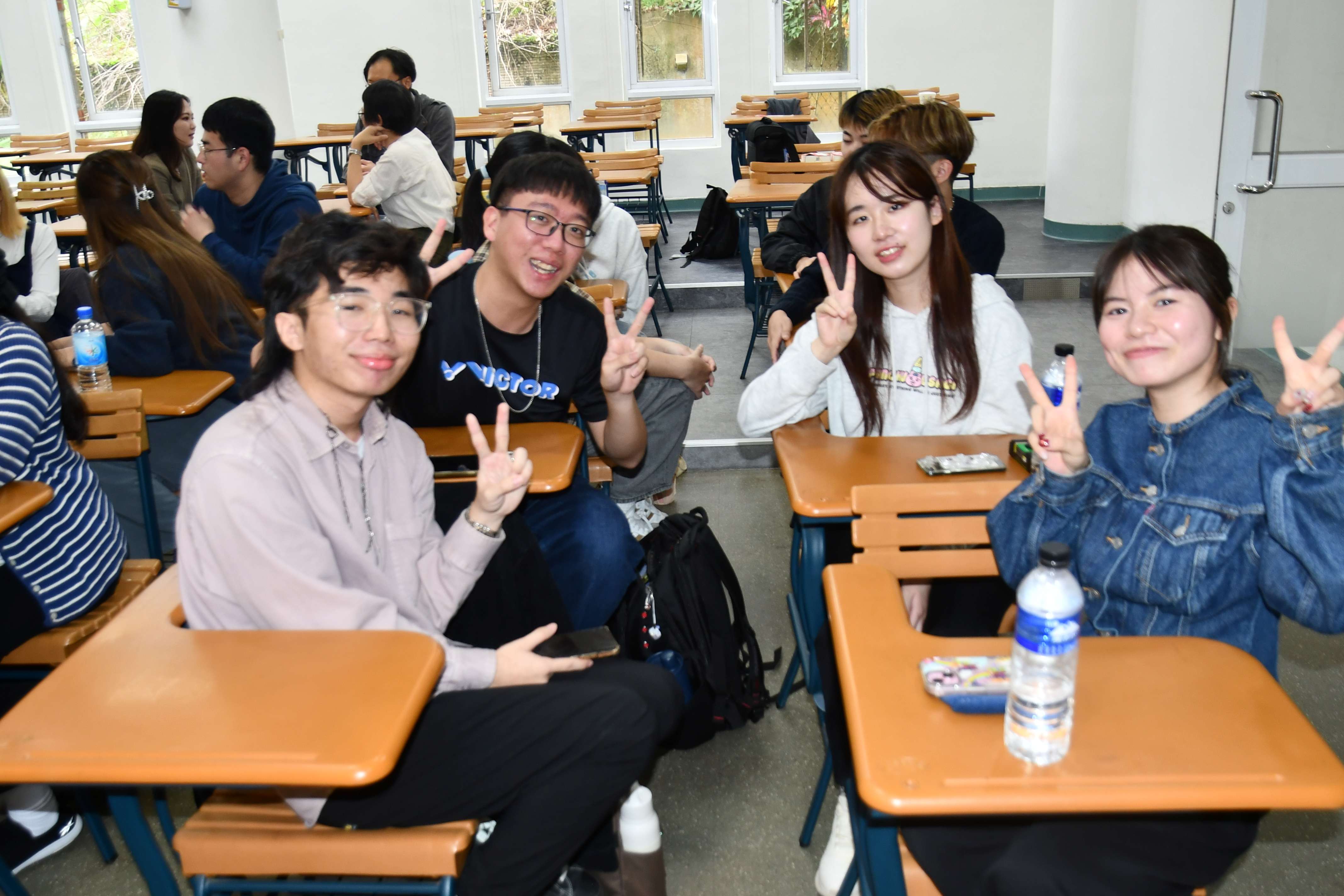
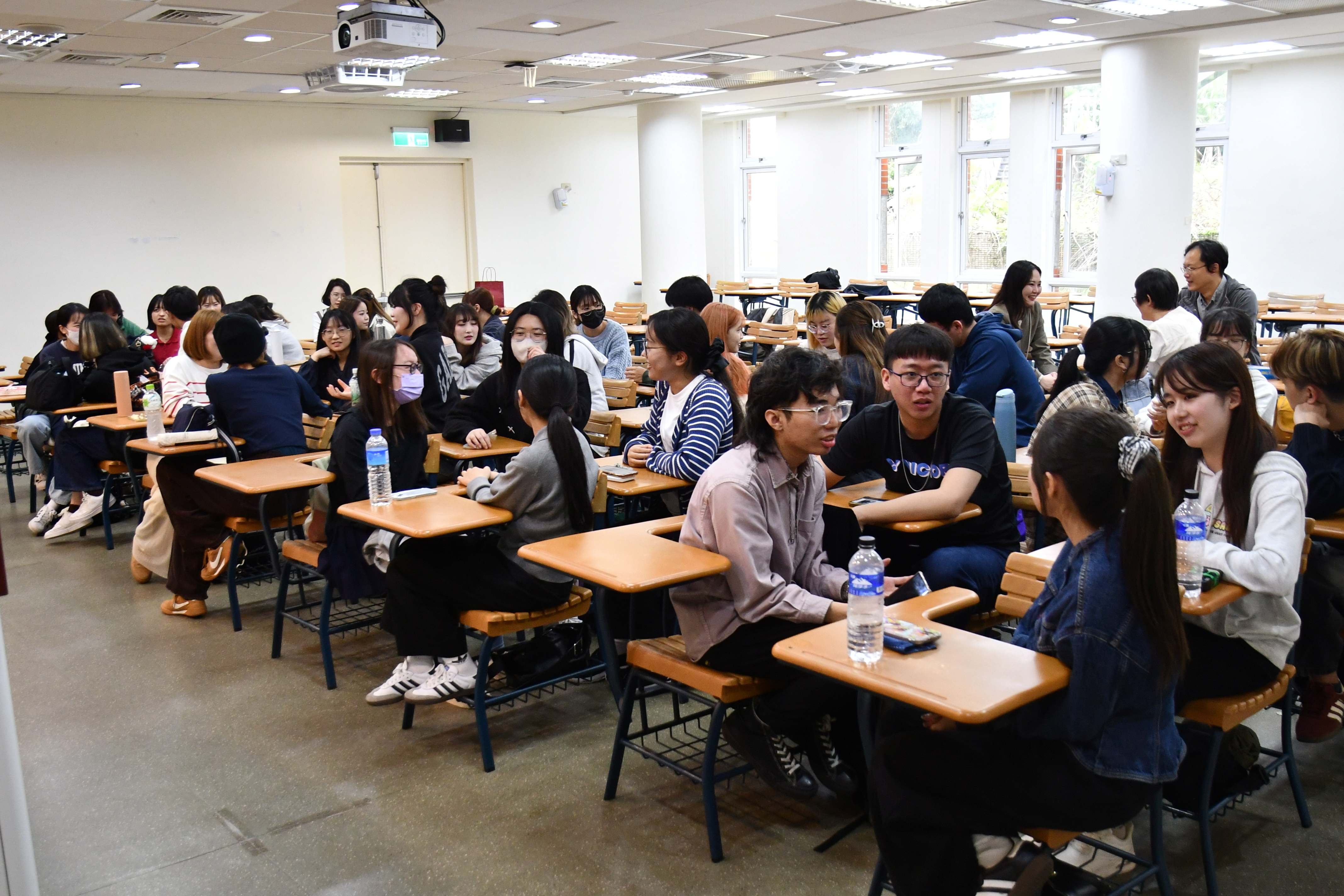
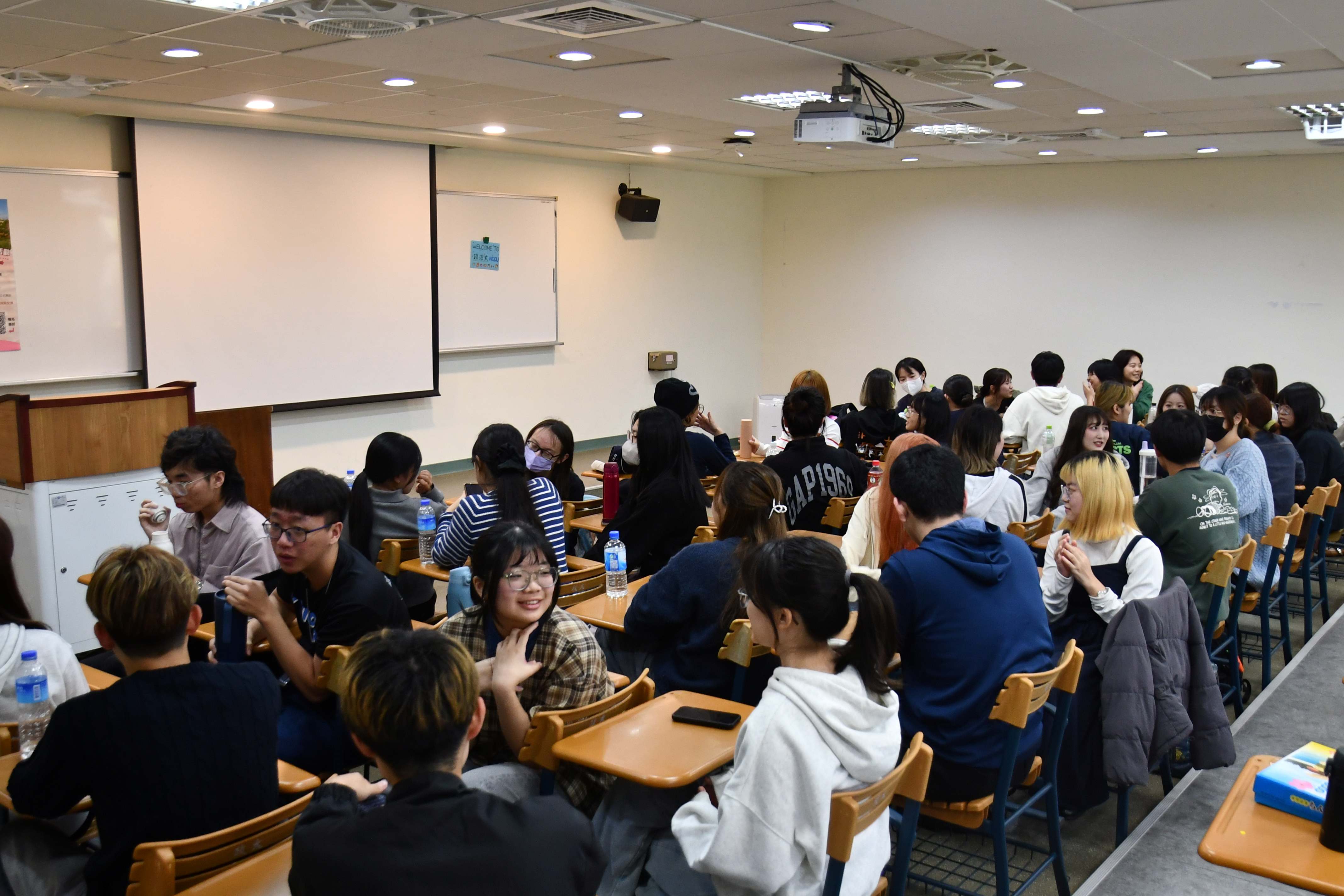
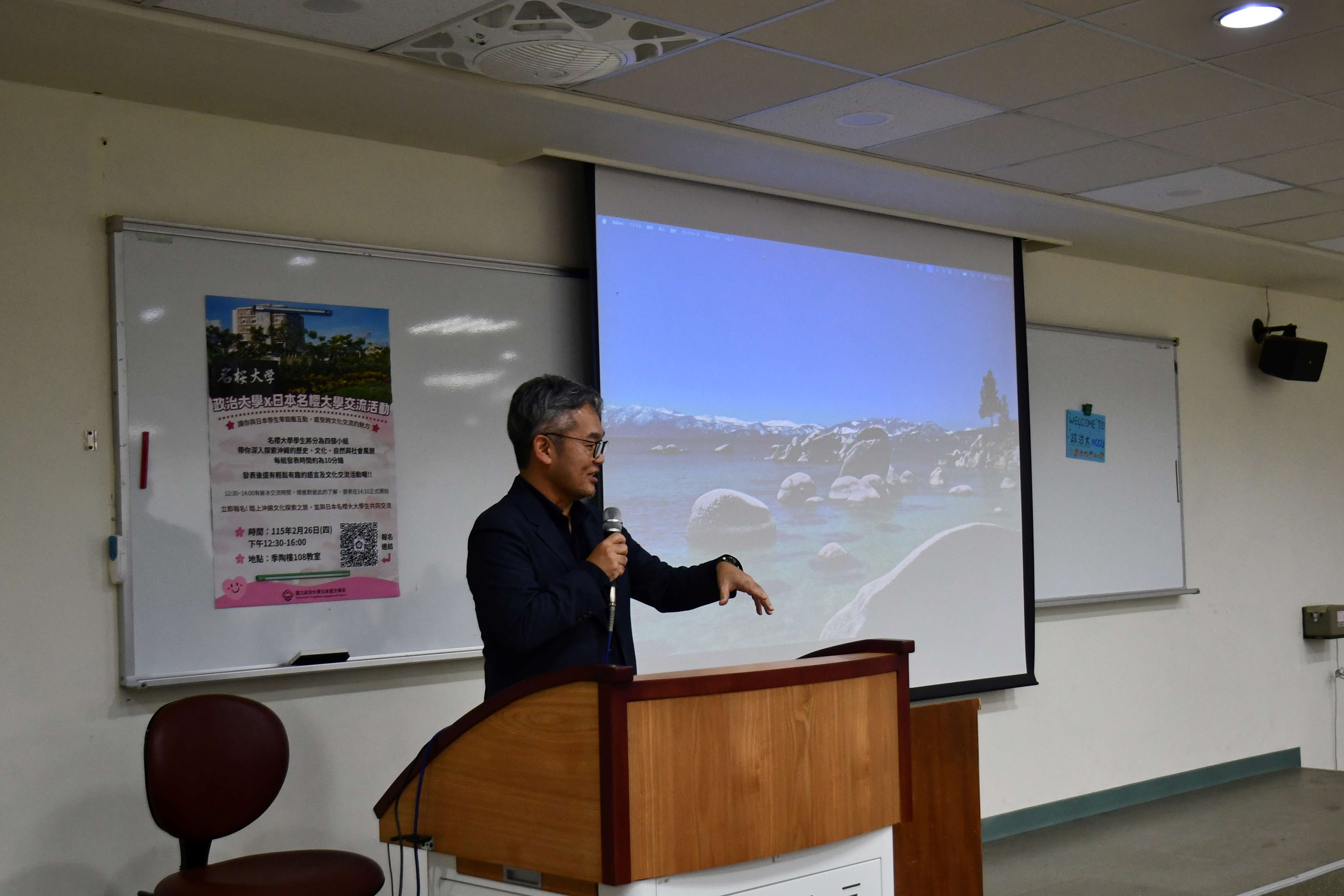
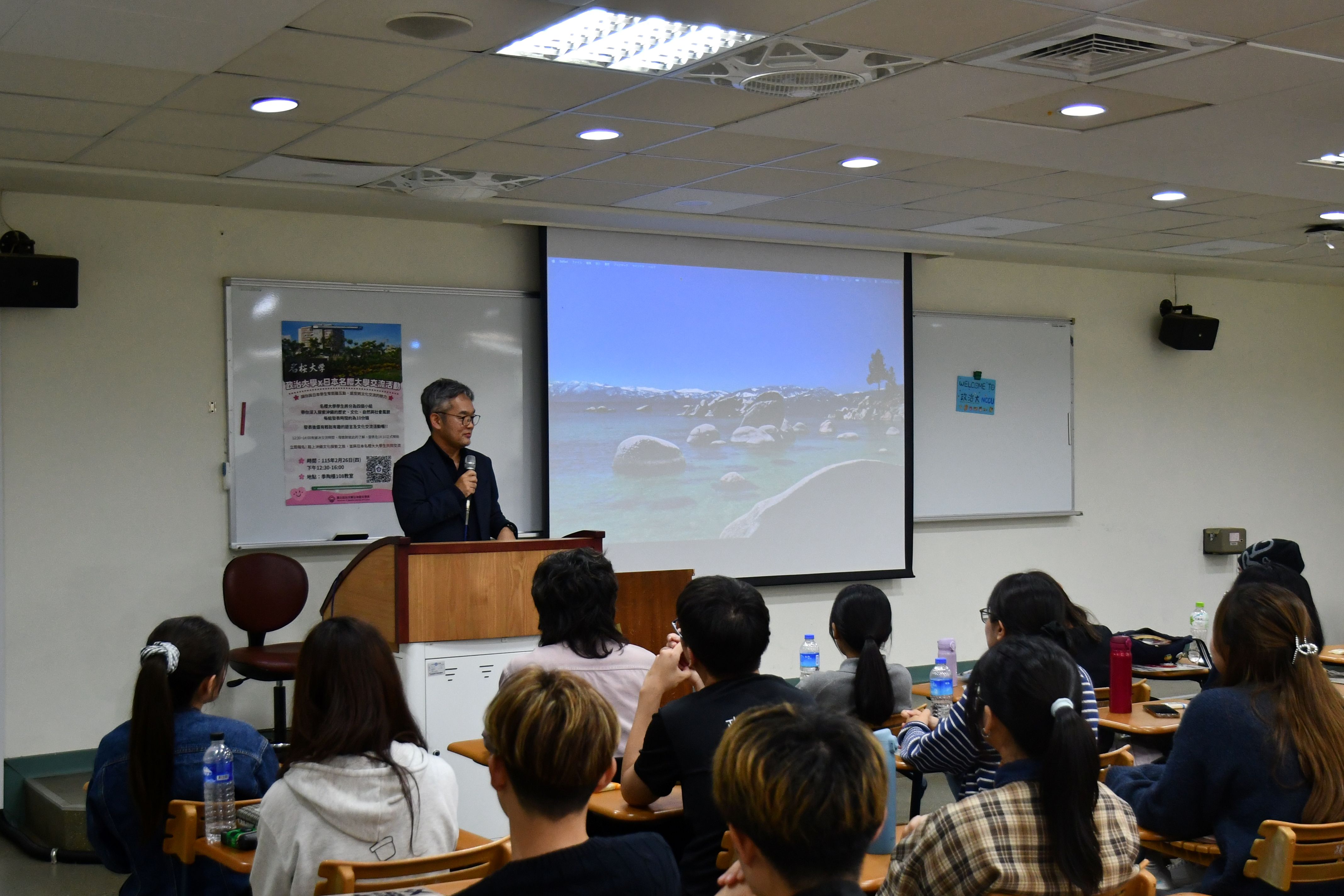
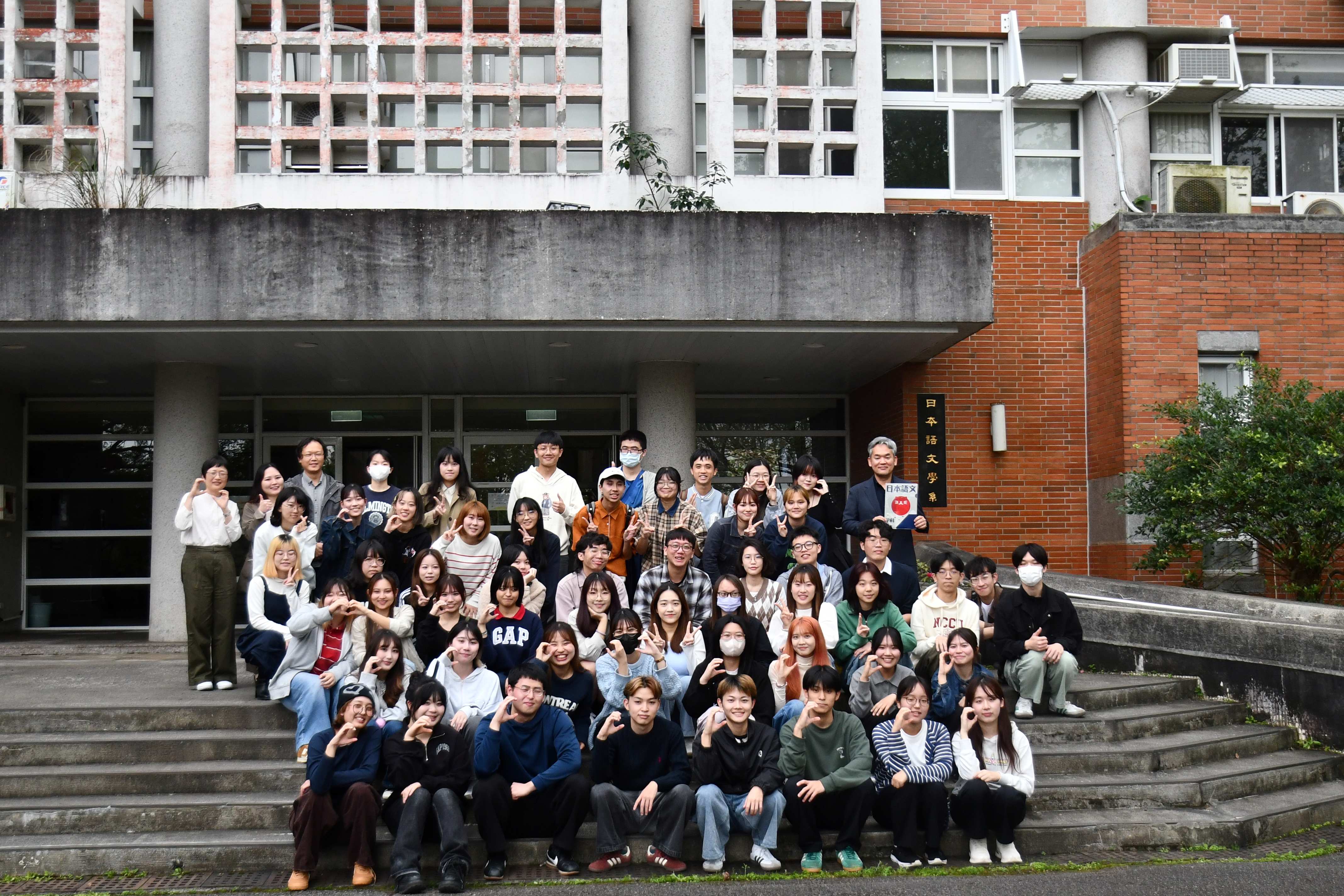
For this cultural event, our department was deeply honored to once again welcome over twenty students from Meio University in Okinawa, Japan, for a dynamic language and cultural exchange. Through engaging presentations and peer-to-peer interactions, our students gained profound insights into Okinawa's history, social structures, rich culture, and natural ecosystem, while exploring the fascinating similarities and differences in lifestyle between Taiwan and Okinawa. For instance, while both Taiwan and Okinawa are island societies, their daily transportation habits differ significantly; public transit is heavily utilized in Taiwan, whereas driving personal vehicles remains the primary mode of transportation in Okinawa due to distinct local infrastructure. The exchange also highlighted unique ecological trivia about Okinawa. Notably, the Japanese government historically introduced mongooses to the island to control the native venomous habu snake population. However, because the snakes are nocturnal and mongooses are diurnal—combined with the abundance of easier prey—the plan backfired, impacting local biodiversity instead. Later, local tourism operators adapted by creating the famous "Habu Show." While early iterations featured direct confrontations, contemporary shows have evolved into lighthearted demonstrations, such as swimming races between the animals. This memorable gathering not only deepened cultural intelligence but also laid a strong foundation for continued international partnership.